
Last Updated on February 9, 2026 by Richard Martin Linga
SEO for ecommerce (Search Engine Optimization) is the practice of improving an online store so it appears higher on search engines like Google. This helps attract more free visitors who are actively searching for products. Instead of relying on paid ads, businesses optimize product and category pages, website structure, technical performance, and helpful content to match customer searches and guide shoppers toward making confident buying decisions.
For businesses that want better online visibility, working with an SEO Specialist in the Philippines can make a big difference. With the right strategy, online stores can improve rankings, attract targeted buyers, and build long-term growth without depending on expensive advertising campaigns.
What Is SEO for Ecommerce and Why Does It Matters?
SEO for ecommerce helps online stores appear on search engines like Google. When people search for products, good SEO helps your store show up first. This brings more visitors who are ready to buy. It also helps you grow without spending too much on ads.
When your website is easy to find, more people can visit it. More visitors often mean more sales. That is why SEO is important for every online business today.
How SEO Helps Online Stores Grow?
Search engines want to show the best websites to users. If your store is clear, fast, and helpful, it has a better chance to rank higher.
Good SEO makes your site:
- Easier to find
- Easier to use
- More trusted by buyers
With the right setup, your store can attract people who are already looking for what you sell.
Why Does SEO Matters for Your Website?
A well-optimized store looks more professional. It also feels safer for customers. People trust websites that appear on the first page.
Using SEO for ecommerce website strategies helps you improve:
- Product pages
- Category pages
- Website speed
- Mobile experience
These small changes can bring big results over time.
The Role of Website Checks and Improvements
Before improving your site, you must know what needs fixing. This is where reviews and testing help.
A SEO website audit in the Philippines can show problems like:
- Slow loading pages
- Broken links
- Missing content
- Poor structure
Fixing these issues helps your store work better for users and search engines.
How SEO Supports Long-Term Success?
SEO is not a one-time task. It is a long-term plan. When done right, it keeps bringing visitors every month.
Instead of paying for ads again and again, SEO builds steady growth. Your store becomes stronger over time. This helps you compete with bigger brands and reach more customers naturally.
How Search Engines Rank Ecommerce Websites?

Search engines like Google want to show the best results to users. They look at many parts of your website before deciding where it should appear. When your site is clear, helpful, and easy to use, it has a better chance to rank higher.
This process supports long-term success, especially when combined with strong SEO for ecommerce practices.
How Search Engines Find Your Website?
Before ranking your site, search engines must first find it. They use special tools to visit your pages and read your content.
If your pages load fast and work well, they are easier to scan. This helps search engines understand what your store is about and who it is for.
Why Content Quality Matters?
Search engines prefer websites that give clear and useful answers. Your product pages should explain items in simple words. Your blog posts should help readers learn.
Using SEO for ecommerce site strategies helps you write content that matches what people search for. This makes your pages more valuable to both users and search engines.
Importance of Website Structure
A well-organized website is easier to explore. Both visitors and search engines benefit from clear menus and links.
When pages connect properly, search engines can move through your site faster. This improves how your store is ranked.
How User Experience Affects Rankings?
Search engines watch how people use your site. If visitors stay longer and click more pages, it shows that your site is helpful.
Slow pages, broken links, or confusing layouts can push users away. This can lower your ranking over time.
Why Location and Platform Matter?
Your business location and website system also play a role. Many E-commerce platforms in the Philippines are built to support fast loading and mobile-friendly design.
When you choose the right platform and keep it updated, your store becomes easier to manage and easier for search engines to trust.
Building Strong Rankings Over Time
Search engine rankings do not improve overnight. They grow step by step. When you focus on quality, speed, and clear content, your website becomes stronger each month.
By staying consistent and making regular improvements, your online store can earn better visibility and attract more buyers naturally.
How Does E-commerce SEO Work?
E-commerce SEO helps your online store appear higher on search engines like Google. When your pages rank well, more people can find your products. This brings more visitors who are ready to buy. Over time, this method supports steady growth and works well with simple SEO for ecommerce strategies.
Unlike paid ads, SEO keeps working even when you stop spending money. It helps your store get steady traffic without paying for every click.
Finding Your Website
Search engines first need to find your website. They visit your pages and read your content. If your site is clear and well-organized, it becomes easier to understand.
When pages load fast and links work properly, search engines can scan your store better. This helps improve your online visibility.
Creating Helpful Content
Your website content must be clear and useful. Product pages should explain items in simple words. Blog posts should answer common buyer questions.
Good content builds trust. It also helps search engines know what your store offers. This is where SEO services for ecommerce can support better page quality and structure.
Improving Website Structure
Your website must be easy to use. Menus should be simple. Categories should be clear. Visitors should find products without confusion.
When people move easily through your store, they stay longer. This shows search engines that your site is helpful and reliable.
Supporting Mobile Users
Many shoppers use phones to browse and buy online. Your website must work well on small screens. Text should be easy to read. Buttons should be easy to tap.
Using modern e-commerce tools in the Philippines can help improve speed, design, and mobile performance. These tools support a better shopping experience.
Building Long-Term Results
E-commerce SEO works step by step. Results grow over time, not overnight. Each update helps your website become stronger.
When you improve content, speed, and layout regularly, your store gains more trust. This leads to better rankings, more visitors, and steady online growth.
4 Key Components in an E-commerce SEO Strategy
A strong e-commerce SEO plan helps your online store grow step by step. It focuses on making your website clear, useful, and easy to trust. When done well, these steps support better rankings and long-term results from SEO for ecommerce efforts.
Below are the four main parts you must improve to succeed.
Creating Quality Content
Your website content tells search engines what your store is about. It also helps buyers understand your products.
Each page should use clear words. Product titles, descriptions, and page headings must match what people search for. This helps your store appear in the right results.
Using SEO for ecommerce websites methods helps improve:
- Page titles
- Descriptions
- Product details
- Category pages
Good content builds trust and increases sales.
Improving Technical Setup
Your website must work smoothly at all times. Pages should load fast. Links should open correctly. Your site should stay secure. A strong technical setup helps search engines scan your store without problems. It also gives visitors a better experience.
Many stores using shopify in the Philippines benefit from built-in tools that support speed, safety, and mobile use. When your website works well, both users and search engines reward it.
Enhancing User Experience
User experience means how people feel when using your site. Visitors should find products quickly. Pages should not confuse them.
If users stay longer and browse more pages, search engines see your site as helpful. This helps improve your rankings.
A good experience includes:
- Easy menus
- Clear buttons
- Fast checkout
- Simple design
Happy visitors often become loyal buyers.
Building Strong Links
Links connect your website to other trusted pages online. They also help visitors move between your own pages. Internal links guide users to related products. External links from other websites show that your store is reliable.
When good sites link to you, search engines trust you more. This improves your online reputation and visibility.
Elevating Shikku’s Online Presence through Strategic SEO Services
Overview: Shikku (https://shikku.com.au/)

In October 2025, Shikku began its journey to strengthen its online presence through professional SEO services. As an artisan leather handbag brand in Australia, Shikku needed stronger visibility in competitive eCommerce search results.
Our team partnered with Shikku to improve keyword rankings, increase organic impressions, and build a solid foundation for long-term digital growth. The focus was on turning product pages into traffic-generating assets while improving overall search performance.
First Month with SEO Services: October 2025
In the first month, our SEO specialists conducted a complete website and market analysis. The goal was to identify quick wins while preparing the site for sustainable growth.
Targeted Keyword Optimization
- In-depth research on handbag and accessory keywords.
- Focus on product-based searches such as tote bags, hobo bags, and phone pouches.
- Optimization of collection and product pages.
On-Page Enhancements
- Improved meta titles and descriptions.
- Better heading structure for category pages.
- Internal linking between collections and products.
- Optimization of URLs and product content.
These actions helped improve Shikku’s visibility in Australian search results.
Competitive Landscape Analysis
We analyzed leading fashion and handbag competitors in Australia to understand:
- Keyword gaps
- Pricing and content strategies
- Product page optimization methods
- Link-building patterns
This allowed us to position Shikku more effectively in search results and focus on low-competition, high-value keywords.
Content Strategy Development
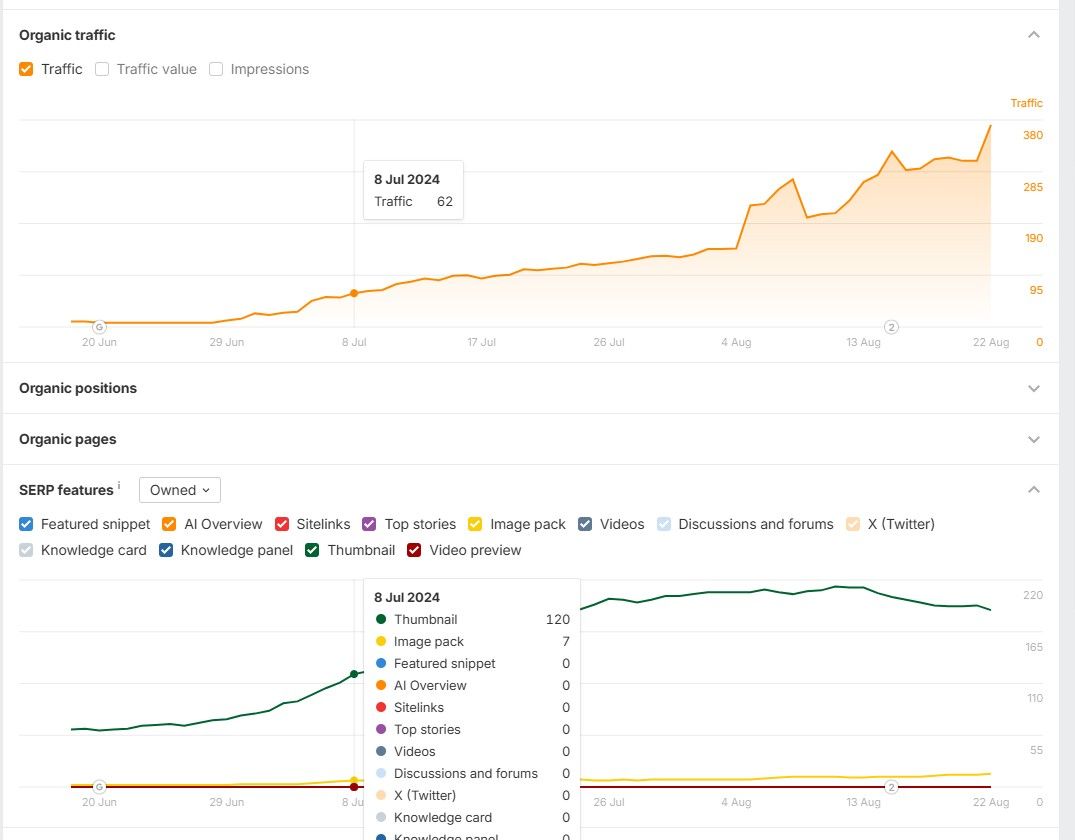
A structured content strategy was implemented to support organic growth.
Key actions included:
- Creation of optimized collection pages.
- Keyword-focused product descriptions.
- Content planning for future blog and brand pages.
- Targeting buyer-intent search terms.
This helped increase relevance for search engines and improve indexing.
Performance Monitoring and KPI Tracking
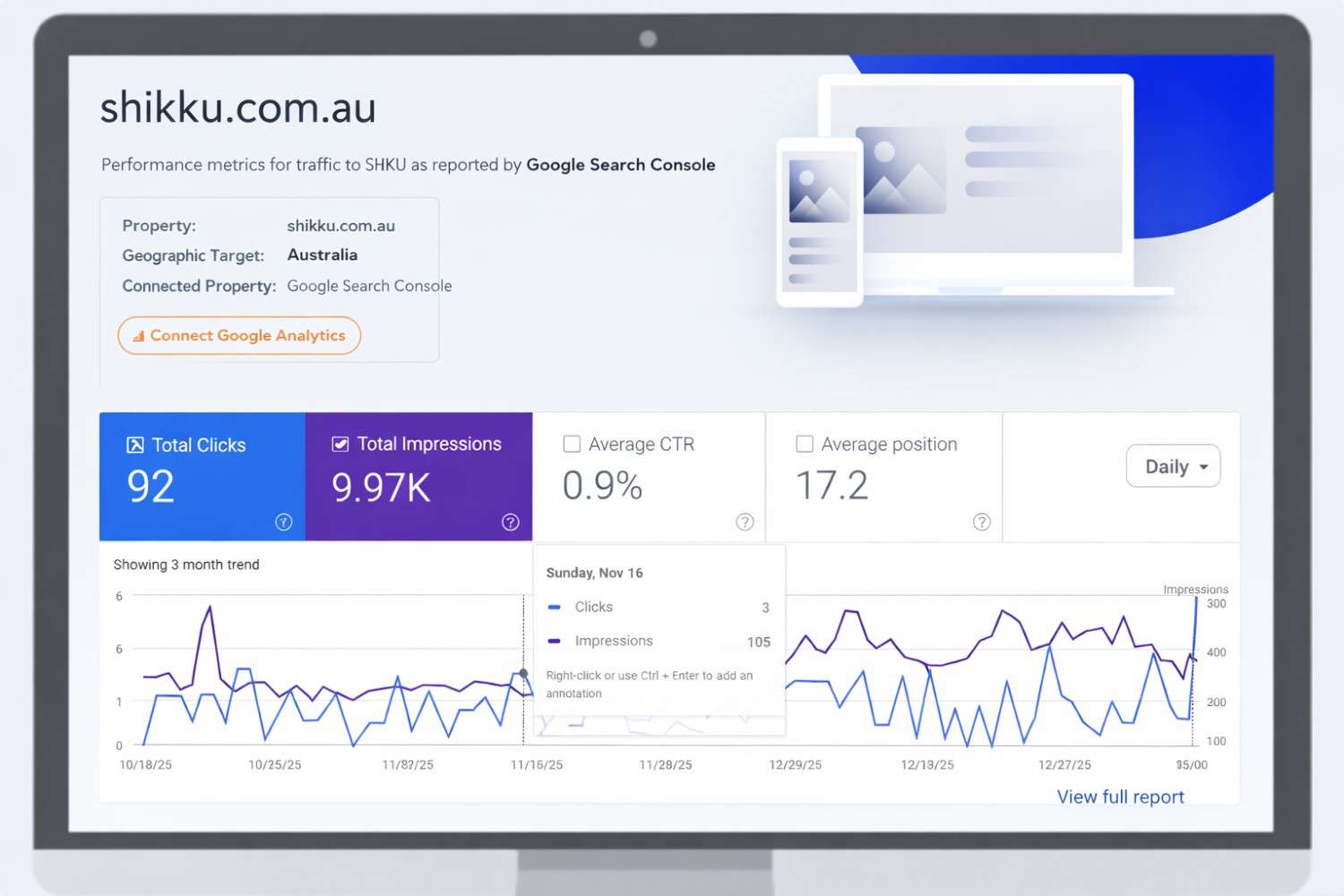
From October 18 to December 29, 2025, we closely monitored performance using Google Search Console and SEO tools.
Key metrics tracked:
- Organic impressions
- Click-through rate (CTR)
- Keyword positions
- Backlinks and referring domains
- Product page rankings
Data-driven adjustments were applied regularly to improve results.
Highlights
The implementation of SEO strategies resulted in steady growth in visibility and rankings.
Performance Results (Oct–Dec 2025)
9.97K
Total Impressions
92
Total Clicks
0.9%
Average CTR
17.2
Average Position
208+
Backlinks
55
Referring Domains
32+
Ranking Keywords
Keyword Growth Achievements
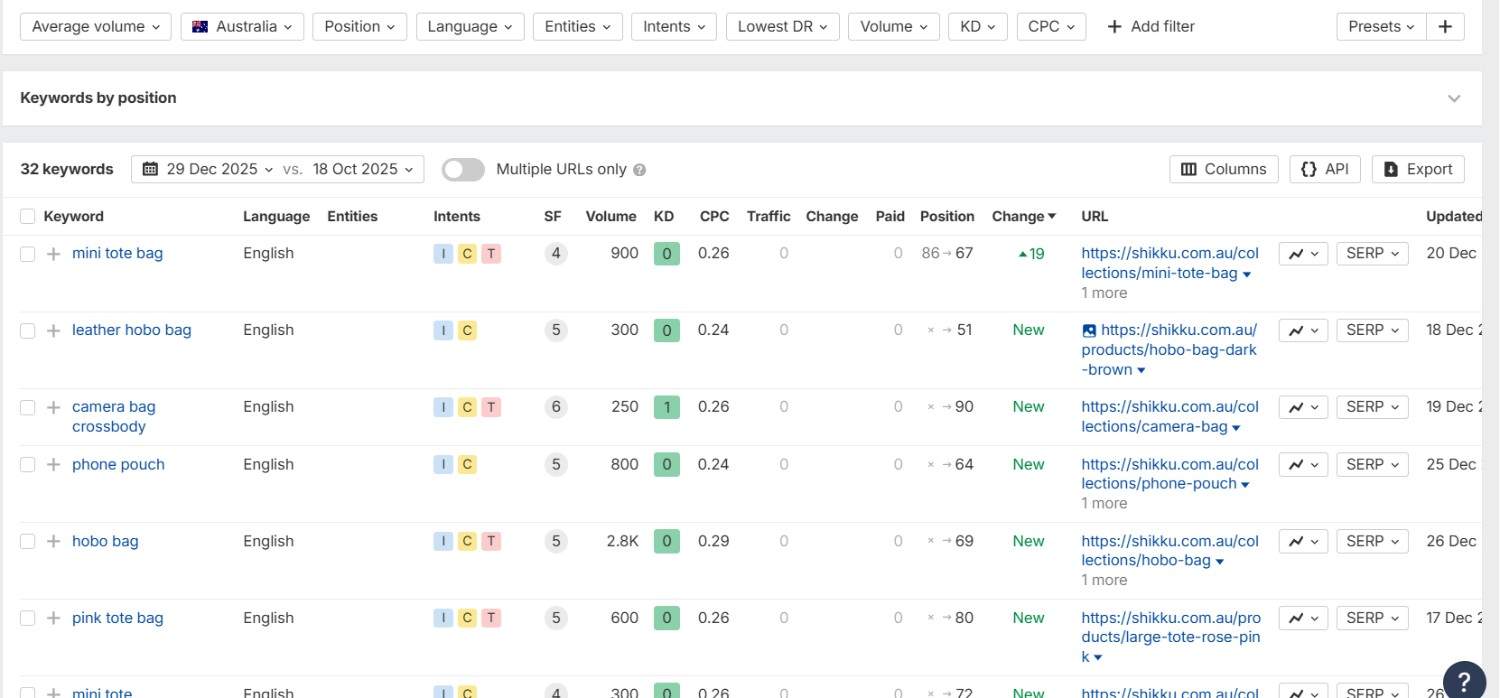
Several important commercial keywords showed positive movement:
- Mini tote bag (↑ 19 positions)
- Leather hobo bag (New ranking)
- Camera bag crossbody (New ranking)
- Phone pouch (New ranking)
- Hobo bag (New ranking)
- Pink tote bag (New ranking)
These keywords target buyers actively searching for fashion accessories, helping drive qualified traffic.
Identifying Opportunities
Before SEO implementation, Shikku had limited organic reach and low keyword visibility. Many product pages were not optimized for search.
Our focus areas included:
- Improving collection page structure
- Strengthening product descriptions
- Building relevant backlinks
- Enhancing technical SEO elements
This transformed the website into a scalable eCommerce platform for organic growth.
SEO Strategy Unveiled
A two-month optimization phase focused on building long-term authority and visibility.
Key Strategies:
- Technical SEO audits and fixes
- Keyword-driven content optimization
- Collection page enhancement
- Product schema improvements
- Backlink acquisition
- Search Console performance tracking
These strategies helped Shikku establish a strong foundation in organic search.
What Are the Benefits of E-commerce SEO?
E-commerce SEO helps online stores grow in a simple and steady way. It makes your website easier to find, easier to use, and more trusted by buyers. When done well, it supports long-term success and works smoothly with strong SEO for ecommerce strategies.
Below are the main benefits every online business should know.
Better User Experience
Search engines want users to have a good experience. When visitors enjoy using your website, your rankings improve.
A good experience means:
- Pages load fast
- Products are easy to find
- Information is clear
- Checkout is simple
When your site feels smooth and helpful, people stay longer. This sends positive signals to search engines.
Working with SEO services for ecommerce can help improve these areas step by step.
Wider Brand Reach
E-commerce SEO helps more people discover your store online. When your pages appear in search results, new shoppers can find you every day.
Over time, this builds brand awareness. People begin to recognize and trust your business. Strong SEO for ecommerce websites strategies also help you stand out from competitors in crowded markets.
Higher Quality Visitors
SEO brings visitors who are already interested in what you sell. These people search with clear buying goals.
Because of this, they are more likely to:
- View product pages
- Add items to cart
- Complete purchases
This leads to better conversion rates and more steady sales.
Lower Marketing Costs
SEO helps reduce spending on ads. You do not need to pay for every visitor. Once your pages rank well, they can bring traffic for months or years. This makes SEO a smart and cost-friendly choice for growing stores.
Many businesses also use content writing services in the Philippines to create helpful pages at lower costs.
Long-Term Business Support
Unlike ads that stop when payments end, SEO keeps working over time. Your website continues to attract visitors even without daily spending.
With regular updates and small improvements, your site stays strong. This gives your business stable growth and better online security.
Building Trust and Authority
Websites that rank well often look more trustworthy. Shoppers feel safer buying from brands they see on the first page.
Good SEO helps your store appear reliable and professional. This builds confidence and encourages repeat customers.
Growing with Confidence
E-commerce SEO supports slow but steady success. It improves your website, strengthens your brand, and brings loyal buyers.
By focusing on user experience, reach, quality traffic, and low costs, your online store can grow with confidence and stability.
What Are the Challenges of E-commerce SEO and Best Practices?
E-commerce SEO can help your online store grow, but it also comes with challenges. Many businesses struggle because they rush the process or miss important steps. To succeed with SEO for ecommerce, you must understand these problems and follow simple best practices.
Below are the most common challenges and how to fix them.
Low Quality Content
One major problem is weak content. Some stores copy product details from suppliers. Others write very short descriptions that do not help buyers.
Search engines prefer original and useful content. Your pages must explain products clearly and honestly. Using SEO services for ecommerce can help you create better product pages that attract visitors and build trust.
Weak Technical Setup
Even good content will not work well if your website has technical problems. Slow pages, broken links, and poor mobile design can hurt rankings.
Your site should:
- Load quickly
- Work well on phones
- Stay secure
- Open without errors
Strong technical setup helps both users and search engines.
Duplicate and Repeated Pages
Some websites have many similar pages. This confuses search engines. It also reduces ranking chances. Each page must be different and helpful. This is very important for large SEO for ecommerce websites with many products. Clear titles and unique descriptions solve this issue.
Unclear Target Audience
Many stores start SEO without knowing their buyers. This leads to poor keyword choices and weak traffic.
You should know:
- Who buys your products
- What problems they have
- What words they use online
This helps you create content that matches real searches.
Outdated Website Content
SEO does not end after publishing pages. Old content can lose value over time. You must review and update pages often. Fresh content keeps your site useful and competitive. Small updates can bring big improvements.
Ignoring Small Search Terms
Some businesses only target popular keywords. These are often very competitive. Smaller keywords may bring fewer visitors, but they attract serious buyers. These users often convert faster. Targeting these terms brings steady results.
Poor Link Building
Links from other websites help build trust. But low-quality links can harm your site. Focus on earning links through helpful content. Guest posts and partnerships can also help. Avoid buying bad links. They can damage your rankings.
Best Practices for Long-Term Success
To overcome these challenges, follow simple rules:
- Write clear and original content
- Improve website speed and layout
- Update pages regularly
- Target the right keywords
- Build trusted links
Many businesses also choose affordable SEO services to manage these tasks without high costs.
Building a Strong SEO System
E-commerce SEO works best when you stay consistent. Fix problems early. Improve pages often. Listen to your customers.
By following best practices and avoiding common mistakes, your online store can grow steadily and compete with larger brands over time.
KPIs to Measure E-commerce SEO Success
Tracking your progress helps you know if your SEO work is paying off. When you follow the right numbers, you can see what improves and what needs more attention. These KPIs show how well your SEO for ecommerce strategy supports traffic, engagement, and sales.
Below are the most important metrics to watch.
Organic Traffic Growth
Organic traffic shows how many people visit your website from search engines. These visitors come without clicking ads. When this number increases, it means more shoppers can find your store. You can track this using Google Analytics and compare results each month.
Keyword Ranking Performance
Keyword rankings show where your pages appear in search results. Higher positions mean better visibility. Tracking keywords helps you understand what works and what needs improvement. If you are new to this, a SEO tutorial for beginners can help you learn the basics.
Click and Engagement Rates
Clicks and visitor behavior show how users interact with your website. Good signs include longer visits and fewer quick exits. Strong titles and descriptions also improve click rates. These tell search engines that your pages are useful.
Revenue and Conversions
Revenue is the most important KPI. It shows how many visitors become buyers. If traffic grows but sales stay low, you may need to improve product pages or checkout steps. Fixing this helps turn visits into income.
Using KPIs to Improve Results
KPIs help you make smart decisions. They guide your updates and future plans. If you want expert support in tracking and improving these metrics, you can hire me to help grow your ecommerce success step by step.
FAQs
1. How long does it take to see results from e-commerce SEO?
Most online stores start seeing small improvements within three to six months. Strong results usually appear after six to twelve months. SEO takes time because search engines need to review and trust your website. Regular updates and quality content help speed up this process.
2. Is e-commerce SEO better than paid advertising?
E-commerce SEO and paid ads both have value. Paid ads bring quick traffic but stop when you stop paying. SEO builds long-term visibility and brings free visitors over time. Many businesses use both for better results.
3. Do small online stores need SEO?
Yes, small online stores need SEO. It helps them compete with larger brands by reaching the right buyers. With good SEO, small businesses can rank for specific keywords and attract loyal customers without spending too much on ads.
4. What pages should I optimize first for e-commerce SEO?
You should start with product pages, category pages, and your homepage. These pages bring the most traffic and sales. Improving titles, descriptions, and images on these pages helps search engines understand your store better.
5. Can I do e-commerce SEO on my own?
Yes, you can start on your own by learning basic SEO skills and updating your website regularly. However, working with an expert can save time and prevent mistakes. Professional help often leads to faster and more stable results.